Harris County, City of Houston
AC repair and HVAC service in Westbury, Houston
Around five thousand ranch houses on unusually large lots, built out inside about eleven years. Wide, low, and served by duct systems that have to travel a long way sideways.
Local context
A neighbourhood that was finished almost as fast as it was started
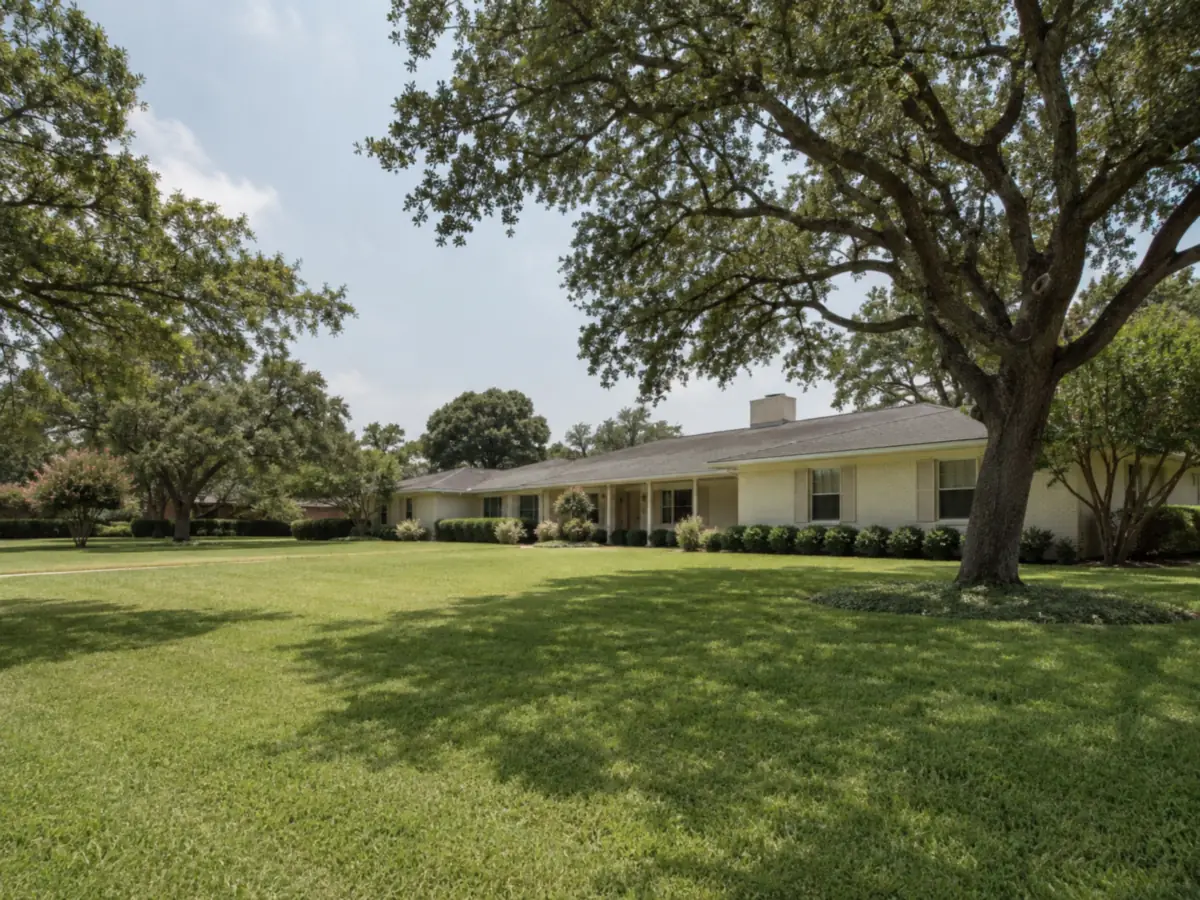
Westbury was developed by Ira Berne, who had moved from Westbury, New York, and named the place after it. Around 1953 the former Sam Houston Airport site was turned over to housing, and Westbury Square opened as its shopping centre in 1960.
It runs to roughly 5,000 homes across Westbury sections one to five, Parkwest one to three and Westbury South, bounded by Bob White Road, US 90A and South Post Oak. The Westbury Civic Club enforces the deed restrictions and has done since the beginning.
Every one of those houses was built as a ranch. Stylistically they vary a great deal, but structurally they share a shape: single storey, slab on grade, low roof pitch, shallow attic, and wide rather than tall. Lots run from about 8,000 to 17,000 square feet, which is generous by any Houston standard and is why so much of the neighbourhood sits under mature tree cover.
Behind Westbury High School, the Willow Waterhole Greenspace covers around 290 acres of detention basins and parkland, which is a reminder that drainage in this part of Houston is engineered rather than incidental.
Westbury at a glance
- Developed: 1950s, by Ira Berne
- Homes: around 5,000
- Sections: Westbury 1 to 5, Parkwest 1 to 3, Westbury South
- Lots: roughly 8,000 to 17,000 square feet
- Housing: single-storey ranch, slab on grade
- County: Harris
- District: within Brays Oaks since 2011
Return air
The return air side is where most Westbury comfort problems actually live
Almost every HVAC conversation is about supply: which vents are blowing, how cold the air is, whether a room gets enough. The return side gets almost no attention from anybody, and in this neighbourhood it is usually the constraint.
Here is why it lands so hard on a 1959 ranch. The original system was smaller and moved less air than what is fitted now, and the return grille was sized for that original system. Equipment has since been replaced two or three times, each time slightly larger or moving more air, and each time fitted to the same opening because enlarging a return means cutting into framing and finishes. The result is a blower working against a restriction every minute it runs.
The symptoms are recognisable once you know to look for them.
A coil that freezes with a clean filter. Not enough air across the coil means the coil gets too cold. See frozen AC coil.
A noisy return. Air being pulled through an opening too small for it makes a sound, and a filter that visibly bows inward when the system starts is the same problem made visible.
Blower motors that keep failing. A motor running at high static pressure works harder and runs hotter for its whole life. See blower motor replacement.
Capacity that never matches the label. A three-ton system that cannot move three tons of air does not deliver three tons of cooling, whatever the plate on the side says.
Correcting a return is usually the cheapest meaningful improvement available in a house like this, and it is almost never what gets quoted. See ductwork.
The other half of the problem
Sixty feet of duct in a two-foot attic
A ranch house puts distance between the air handler and the rooms horizontally, and a low roof pitch means the attic that duct has to travel through is shallow. That combination produces a specific set of findings.
Flexible duct compressed where it passes under a low rafter, because there was nowhere else for it to go. Long runs with several direction changes, each one costing pressure. Branches that were spliced in when a room was added or a garage converted, sized by eye. And duct insulation that has spent six decades in an attic that on a July afternoon runs far hotter than the outdoor air.
Measuring is what separates this from guesswork: static pressure at the air handler, temperature split across the coil, and airflow at the registers in the rooms that are actually complained about. That takes a visit rather than a phone call, but the phone call is where it starts.
Worth knowing before you call
- Which section of Westbury you are in
- Where the air handler sits and how many return grilles the house has
- Which rooms are the uncomfortable ones, and at what time of day
- Whether the coil has ever frozen up
- Roughly how old the outdoor unit is
24/7 emergency HVAC service. Office monday - saturday, 9:00am - 6:00pm.
The neighbourhood
Westbury south of Meyerland
Bounded by Bob White Road, US 90A and South Post Oak, with Meyerland immediately north and the Brays Oaks district around it.
Services here
HVAC work we do in Westbury
Ductwork
Return sizing, supply runs and static pressure, measured rather than assumed.
Hot and cold spots
The far bedroom problem, which is a distance problem.
AC repair
Diagnosis on equipment fitted to a distribution system older than it is.
Frozen coils
Airflow or refrigerant, and the difference matters a lot.
Maintenance
Including the condenser coil, which collects a lot under mature trees.
AC replacement
With the duct assessed first, so the new system can actually perform.
Nearby areas and related pages
Brays Oaks & Fondren SW
The district Westbury sits inside, and a very different housing mix.
Meyerland
North, same era, transformed by flooding and rebuilding.
Southwest Houston
The regional picture these neighbourhoods share.
Ductwork
Return air, static pressure, and why they decide capacity.
Blower motor replacement
What a restricted return does to a motor over time.
AC not cooling
Where to start when it runs and nothing much happens.
Westbury questions
How old is my Westbury house, roughly?
Why does the far end of the house never cool properly?
My coil keeps freezing up and the filter is clean. What else causes that?
Is Westbury part of Brays Oaks?
Do the big lots make any practical difference?
How many return grilles does the house have? It is an odd question, and here it is often the most useful one.
Call (855) 758-5353Clean filter, frozen coil, same every summer?
In a 1960 ranch that combination points somewhere specific, and it is not usually the outdoor unit.