Harris County, City of Houston
AC repair and HVAC service in Meyerland
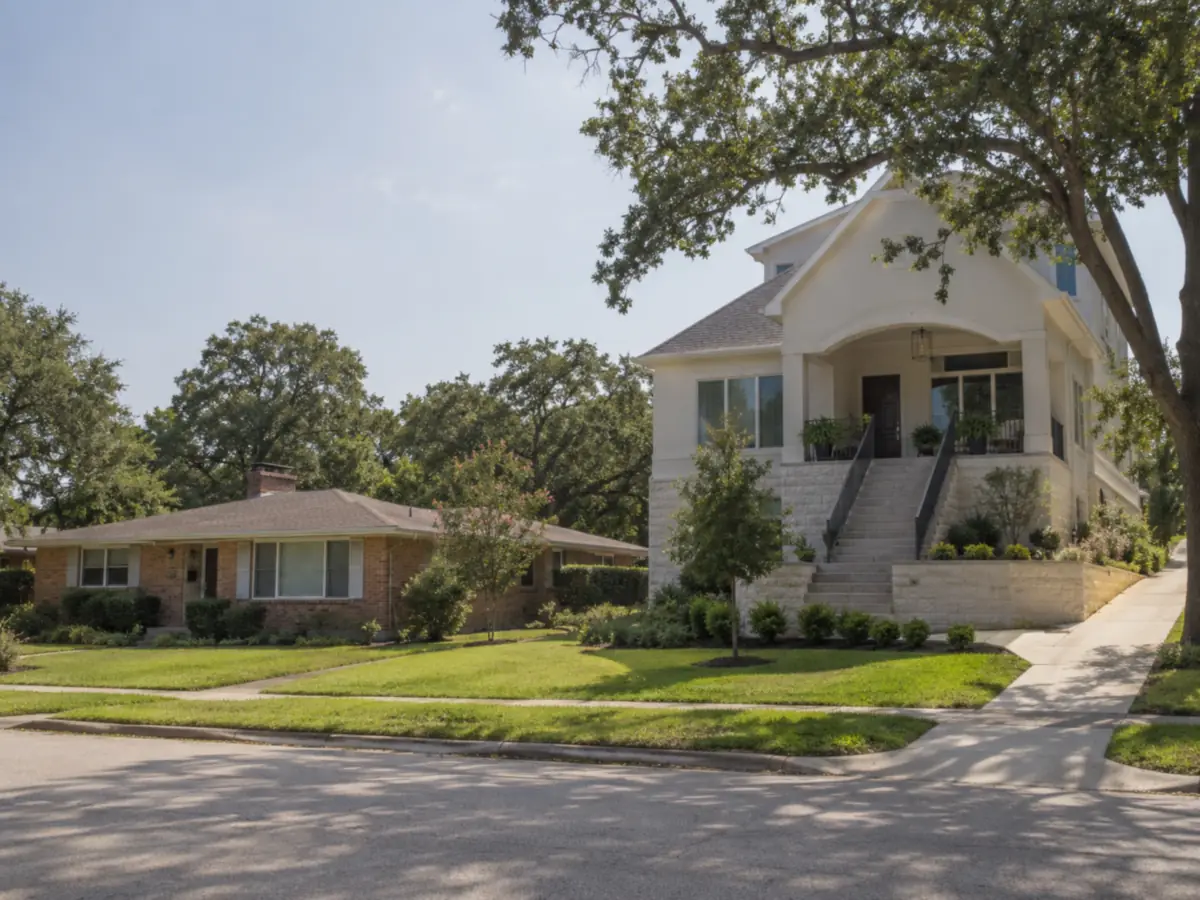
Two Meyerlands now share the same streets: the 1955 ranch houses that were always here, and the rebuilds that stand several feet higher than they do. The mechanical systems have almost nothing in common.
Local context
1,200 acres, one developer, and then a decade that rewrote it
George Meyer developed his 1,200 acre share of the family land into Meyerland in 1955. Vice President Richard Nixon attended the ribbon-cutting, and it became one of the first deed-restricted communities in the City of Houston. The housing that went up was mid-century ranch, described in 2006 as cosy ranch houses from the fifties and sixties in Tudor, colonial and contemporary variations.
It sits between the 610 Loop and Beltway 8, immediately south of Bellaire, and held around 21,445 residents as of 2015.
Then came the Memorial Day flooding of 2015, the Tax Day flooding of 2016 and Hurricane Harvey in 2017, all along Brays Bayou. What followed changed the built fabric of the neighbourhood more than anything since 1955: buyouts, teardowns, and a wave of rebuilding in which new houses were constructed several feet above the minimum base flood elevation.
So a single street can now hold an unmodified 1957 ranch, a 1957 ranch that was gutted and repaired, and a 2021 house standing four feet higher than both. For mechanical work, those are three different jobs.
Meyerland at a glance
- Developed: 1955, by George Meyer
- Size: about 1,200 acres
- County: Harris
- City: Houston, not a separate municipality
- Position: outside Loop 610, inside Beltway 8
- Original housing: single-storey mid-century ranch
- Permitting: Houston Permitting Center
Housing stock
Three kinds of house, three different starting points
The original ranch
Unmodified, 1955 to mid 1960s
Slab on grade, low-pitched roof, shallow attic, equipment in a hall closet or squeezed into that attic. Single central return sized for equipment far smaller than what is fitted now. These houses cool unevenly along their length because a ranch plan is wide rather than tall, and the far end is a long horizontal run from the air handler.
Flooded and repaired
Water history worth knowing
Interiors were rebuilt, but mechanical equipment often was not, or was only partly replaced. Corrosion on coils, cabinets and electrical components, duct insulation that was wet at some point, and in-slab duct where it exists. Nothing here is automatically a problem. It is a set of possibilities a technician should have in mind rather than discover.
Elevated rebuild
Post-2017, built several feet up
Larger, tighter, usually two storeys and frequently two systems. The problems are modern ones: humidity in a tight envelope, balance between floors, and a condensate route that now has further to fall to reach daylight. The good news is that the mechanical layout was designed rather than inherited.
Which of the three a house is tells a technician more than its street address does, and it is the single most useful thing to say on the phone.
Condensate and drainage
Why drain lines matter more here than almost anywhere
An evaporator coil in this climate pulls a substantial volume of water out of the air every day the system runs, and humidity here averages around 75%. In a house with the air handler above a finished ceiling, all of that water leaves through a drain line, and when the drain line blocks it goes somewhere else.
In most neighbourhoods that is an expensive annoyance. In one where a large share of households have already replaced their floors and walls once because of water, it is a different conversation entirely. Homeowners here tend to ask better questions about drainage than homeowners anywhere else in this service area, and they are right to.
What actually prevents it is unglamorous. A primary drain with real fall on it, kept clear. A secondary drain or an emergency pan that is not itself blocked. A float switch that works, tested rather than assumed. And a service interval that treats the drain as the priority item rather than an afterthought at the end of a tune-up.
The failure sequence is well understood: the line blocks, the pan fills, the float switch either shuts the system off or fails to, and either the air conditioning stops or the ceiling gets wet. See clogged condensate drain lines and water leaking from the AC.
The neighbourhood
Meyerland between the Loop and the Beltway
Bellaire adjoins to the north, Westbury to the south, Braeswood to the east. Brays Bayou runs through the area from west to east.
Services here
HVAC work we do in Meyerland
Drain line service
The item that matters most in a neighbourhood with this history.
AC repair
Diagnosis that starts by asking what the house has been through.
Evaporator coils
Where corrosion on older or water-exposed equipment usually shows first.
AC replacement
Including where the equipment should sit in a rebuilt or elevated house.
Humidity control
For tight new rebuilds that reach setpoint without ever feeling dry.
Maintenance
Drain-first service rather than a filter change and a handshake.
Nearby areas and related pages
Bellaire
Directly north, its own city, and its own permit department.
Westbury
South, built in the same decade but never redeveloped the same way.
Southwest Houston
The wider area and why 1955 duct governs so much of it.
Float switch repair
The device that decides whether a blocked drain becomes a ceiling repair.
AC water leak
What to do in the first ten minutes.
Indoor air quality
Humidity in tight rebuilds, and what actually helps.
Meyerland questions
My house flooded and was repaired rather than rebuilt. What should I be watching on the AC?
We rebuilt and the house is elevated. Where should the equipment be?
Is Meyerland still in the floodplain?
Who issues the permit for HVAC work here?
Whether the house is original, repaired or rebuilt changes almost everything. Say which and the call gets a lot shorter.
Call (855) 758-5353Water coming through a ceiling?
Turn the system off at the thermostat and call. 24/7 emergency HVAC service, and this is exactly the sort of call that should not wait until morning.